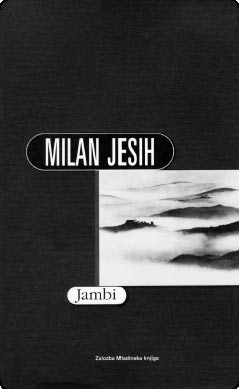
Milan Jesih
Jambi
Mladinska knjiga 2000
The Prešeren Prize
The Jenko Award
The Veronika Award
Milan Jesih (b. 1950) is a poet, dramatist and translator. He started out in the neo-avant-garde theater and in radical poetic modernism, where the existential absurdity hid behind pure language games - as though language were the only remaining human reality, and even that was in the process of disintegrating into pure sound or a paradox. Sonority and the paradox remained two fundamental tools of Jesihs lyric poetry also later, when the poet took to interpreting the poetic tradition in a highly idiosyncratic way, in particular the sonnet (Sonnets, 1989; Sonnets Other, 1993): He divested the sonnet of its classical-lofty content. Jesih questions all known reality: The reality of time, history and culture, of the individual, society and nature, even the reality of his own emotions and the poem itself. In doing this he usually employs irony, which marries within a poem the elatedness of an emotion with the banality of a farce. Or else the poet speaks in oxymora, uttered from pure insecurity regarding what actually exists. The poem exists: It is made of the ephemerality of the world, yet it is already timeless; sovereign in its particular reality and harmonious beauty.
Vanesa Matajc
Vanesa Matajc is the Winner of the Best Young Critic (Stritar) Award.
Translated by Tamara Soban.
Published for the Slovenian presentation at the Frankfurt Book Fair,
October 2002, by the Center for Slovenian Literature.
Volfram (excerpt)
Unseen angels walk noiselessly - barefoot without stirring the wind around
the sleeping houses; this is now. Wooden I like awake in didaskalia,
my eyes weary,
mouth dry, with a heart that knows everything: everything, when even
nothing was too much. The merciless hour of sheet-the date-gone, impressing
no
memory of its traces. Just like those angels outside leaving no
footprints in the
grass. Bread is melting in the cupboard. On chandeliers flies are
lulled into a light
sleep. I, too: just to fulfill the longing of my eyelids! To slide
into sleep!
But there are no angels: it is I who unknowingly stumble in blind images around neighbors, scenting their wives and daughters instead of being in my room; let all of me fall asleep, rest my eyes and give dreaming wings to my bubbling blood. The heart knows everything (when even nothing was too much), but is still fond of pounding: perhaps this is the only true way of being. This is now: the cherry branch in the vase is locked in a spawning of time; on the table cooked spinach, made for the noon meal, hovers in water. The night is dark and silent. Only when a shy south wind blows, the open window winces and the dancer in the curtain pleats stirs.
The night is a dark solitaire, deep like a grave and as gently inviting, softly luring: it kneads doubt into the heart dough, filling peoples bodies with anxiety, and they desire to escape out, across currant bushes and gardens, across streets, bridges and meadows, through mountains crushed to scree, over straits and birch trees - away into a freshly-dug distance;
the evil steals itself into everything, gnawing the skin, corroding metals - utter destruction is its measure: even when for a moment a tiny flame begins to shine in a rat in a cellar or an insect in pea blossoms, a flame that is hope and faith, it hunts it down and kills it. The air in the room is humid, scentless, without memory - its presence a shuddering touch to eyelids. With a blanked wrapped around my knees I sink into an armchair and wish to remain that way, frozen in time.
Translated by Sonja Kravanja